
Short Courses
Fall Arrest Training in Durban | 2-Day Accredited Course
Two days of hands-on fall arrest training in Durban, aligned to SAQA Unit Standard 229998 and the OHS Act. Abethu Skills Development gives your workers the knowledge and practical technique to use fall arrest equipment correctly — not just wear it.
QCTO & CETA-Accredited (No. 3P3812) | 11,500+ Students Trained | Over a Decade of Experience
What Is Fall Arrest Training and What Does the 2-Day Course Cover?
There’s a meaningful difference between wearing a harness and knowing how to use one. Every year in South Africa, workers on construction sites, maintenance crews, and industrial facilities are issued fall arrest equipment — and then go up without a clear understanding of how it actually works, what can go wrong, and how to get someone down if something does.
Fall arrest training exists to close that gap. It’s not a box-ticking exercise. Done properly, it’s the difference between a worker who knows their equipment and one who just has it on.
Abethu’s two-day fall arrest course is aligned to SAQA Unit Standard 229998: Explain and Perform Fall Arrest Techniques when Working at Height. It covers the theory, the equipment, and the hands-on practice — and both components are assessed before a certificate is issued.

The course covers
OHS Act (No. 85 of 1993) requirements for elevated work — what the law actually says and what it requires of both employers and employees
Construction Regulations and General Safety Regulations for work at height
Fall arrest terminology and definitions — lanyards, self-retracting lifelines, energy absorbers, anchor systems
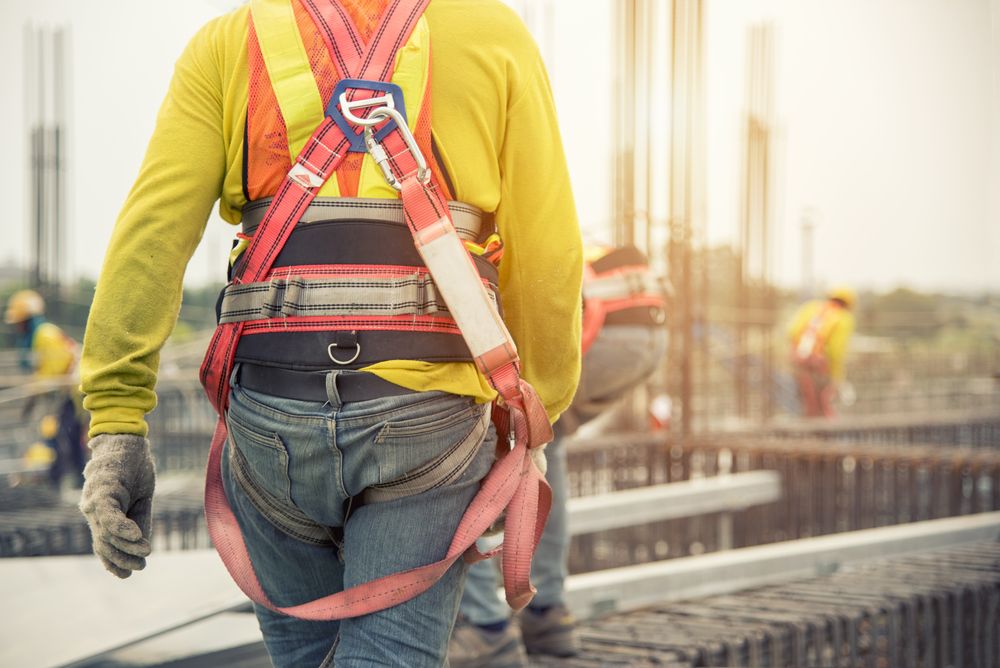
Full body harness components: how they're constructed, how to adjust for correct fit, and what a harness that's been incorrectly fitted actually looks like
Pre-use inspection — how to check harnesses and lanyards before each use, and how to identify equipment that must be taken out of service
Types of fall arrest devices: fixed, retractable, guided-type, and rope grab systems
Anchor points — how to select them, assess them, and understand load ratings
Assembly of a complete fall arrest system from individual components
Using fall arrest with a double lanyard: the correct technique for maintaining continuous connection while moving
Pre-installed vertical and horizontal lifelines — how to connect, move along, and disconnect safely
Tools and falling objects — prevention techniques and drop-zone management
Suspension trauma: what happens physiologically when a person hangs in a harness, why it becomes dangerous quickly, and what the correct response is
Emergency planning — rescue procedures for a suspended worker, including practical rescue technique
The fall protection plan: what it must contain, who is responsible for it, and how it connects to the OHS Act legal requirements
The two-day format allows real time for the practical work. You can't develop genuine competence with harnesses and fall arrest systems by watching someone demonstrate them once. Participants need to rig the equipment, make adjustments, practice the rescue procedure, and have their technique assessed — and that takes time.
Day 1 — Legislation, Theory and Equipment Knowledge
The first day establishes the foundation. Participants work through the legal framework, the risk and hazard identification process, and a thorough breakdown of every component in a fall arrest system. By the end of day one, they can correctly name and describe the function of every piece of equipment, understand when each type is appropriate, and explain what the OHS Act and Construction Regulations require of them on site.
Instructors use real equipment in the classroom throughout — not diagrams. Participants handle harnesses, lanyards, self-retracting lifelines, and energy absorbers while going through the theory so the knowledge connects to physical reality from the start.
Day 2 — Practical Application and Formal Assessment
Day two is entirely practical. Participants suit up and work through harness fitment, pre-use inspection, system assembly, anchor point connection, correct movement technique with a double lanyard, and suspended person rescue procedures — all under qualified instructor supervision.
The practical assessment happens here. Instructors evaluate each participant's technique directly, not through a written test. Only candidates who demonstrate genuine competence in both the theoretical and practical components receive their certificate.
Who Is Required to Complete Fall Arrest Training in South Africa?
The short answer: anyone whose work places them in an elevated position where a fall could cause injury, and who uses or is responsible for fall arrest equipment as part of that work.
More specifically, fall arrest training is relevant and often required for:
Construction and civil works
roofers, shuttering carpenters, painters, waterproofing teams, crane signal persons, and anyone else on a construction site who works above ground level. The Construction Regulations require a fall protection plan on every site, and that plan must document training for working at heights. Contract safety files frequently require certificates before a subcontractor can mobilise on site.
Scaffolding and access teams
scaffold erectors and inspectors need fall arrest competence before going up on partially erected structures. A scaffolding certificate covers the structure itself; fall arrest training covers what you do if the structure doesn't protect you from a fall.
Maintenance and facilities work
building maintenance contractors, window cleaning teams, property management contractors doing roof or façade work. These workers often operate with less formal site safety oversight than large construction projects, which makes proper personal fall arrest knowledge more critical, not less.
Electrical and telecommunications
line workers, tower climbers, antenna and dish riggers, and electrical installation teams doing overhead work. Many client sites in telecoms and energy require a valid fall arrest certificate before granting access to elevated areas.
Industrial and petrochemical
process plant maintenance, tank inspection teams, and workers in any facility where maintenance tasks involve elevated access. Fall arrest is frequently a site induction requirement in these environments.
Supervisors and safety officers
a supervisor who can't identify an incorrectly fitted harness or doesn't understand fall arrest system limitations cannot effectively supervise elevated work. The OHS Act's requirement for competent supervision makes this training as relevant for site management as it is for the workers going up.
The Legal Requirement — OHS Act and Construction Regulations Explained
South Africa’s Occupational Health and Safety Act (No. 85 of 1993) places a direct obligation on employers: provide a working environment that is safe and without risk to health, and ensure that any person working in an elevated position is competent and properly supervised. This isn’t a guideline — it’s a legal requirement with penalties attached.
The Construction Regulations, issued under the Act, add specific requirements for construction environments. Every site must have a fall protection plan. That plan must cover training, equipment, and rescue procedures for working at heights. The plan is a live document — it must be site-specific, current, and available for inspection.
Regulation 6 of the General Safety Regulations is also directly applicable: no employer shall require or permit any person to work in an elevated position unless adequate precautions have been taken. Adequate precautions include training.
The consequences of non-compliance are real. Department of Employment and Labour inspectors have authority to stop work on a site, issue fines, and initiate legal proceedings. Under Section 38 of the OHS Act, penalties can reach R100,000 or two years’ imprisonment. Beyond the legal exposure, an injury or fatality on an unprotected site can generate civil liability, Compensation for Occupational Injuries and Diseases (COID) complications, and reputational damage that follows a business for years.
For companies working in the tendering space — construction, mining, energy, public infrastructure — compliance with OHS Act height safety requirements is increasingly a pass/fail condition before contracts are awarded. A valid fall arrest certificate from an accredited training provider isn’t just a legal requirement; it’s a commercial necessity.
What Happens Each Day — Your 2-Day Fall Arrest Course at Abethu Skills
Theory, Legislation and Equipment
The first day runs in a structured classroom environment. Participants work through the OHS Act and Construction Regulation requirements, learn to identify all fall arrest equipment by name and function, and understand the hazard and risk assessment process for elevated work. The fall protection plan requirement is covered in detail — what it must include, who is responsible for it, and how it relates to the specific work being done.
Instructors use real equipment throughout the theory component. Harnesses and lanyards are in the room; participants handle them while going through the course content so they're not picking them up for the first time on day two.
What to bring: nothing specific. Course materials are provided. A pen helps.
Practical Application and Assessment
Day two is on your feet from the start. Participants work through harness fitting under supervision, pre-use equipment inspection, fall arrest system assembly, correct technique using a double lanyard, anchor point connection, and the practical suspended-person rescue procedure.
Every participant is assessed individually. Instructors watch technique directly, how the harness is fitted, how the system is assembled, how the rescue is handled. Written knowledge is assessed alongside the practical. Participants who demonstrate competence in both components receive their certificate.
What to wear: comfortable clothing you can move in freely. Harnesses, lanyards, and all practical equipment are provided by Abethu.
On Completion Certificate is Issued
Successful candidates receive a certificate of competence aligned to SAQA Unit Standard 229998. This is the standard recognised by CETA, accepted by employers across South Africa's construction, mining, and industrial sectors, and referenced in OHS Act compliance documentation.
Why Durban Contractors Trust Abethu Skills for Fall Arrest Training
QCTO and CETA-accredited — certificates that hold up
Abethu holds CETA accreditation (No. 3P3812) and QCTO recognition under two qualifications: Assistant Handyperson (05-QCTOSDP010925142222) and Construction Machines (05-QCTOSDP060725165108). When a safety officer, site manager, or DOL inspector checks the credentials behind your workers' certificates, accreditation from a recognised body matters.
Instructors who have worked on actual sites.
Abethu's facilitators aren't safety consultants who've spent their careers in training rooms. They understand fall arrest equipment in the context of real work — the conditions, the shortcuts that get taken, the situations that don't match the textbook diagram. That experience comes through in the practical sessions.
Two full days, properly structured.
Some providers compress fall arrest training into a single day to make it cheaper and faster. The practical competence suffers. Two days allows time for thorough theory and genuine hands-on practice with assessed outcomes — which is what the SAQA unit standard actually requires.
Over a decade in Durban, 11,500+ students trained.
Abethu isn't a new operation. The track record, the infrastructure, and the relationships with industry in KZN are all established. That stability matters when you're choosing a training provider your safety file will reference.
Group training and on-site delivery
Companies training multiple employees don't have to send people through in small batches. Abethu accommodates group bookings at the Durban training centre and deploys to client sites across KZN for larger teams. On-site training can incorporate your own equipment and elevated structures where relevant.
No hidden costs.
The course fee covers everything included in the two days — materials, all fall arrest equipment for practical sessions, and the certificate. We confirm exactly what's included when you enquire.
 Posted on Google
 Nhlanhla Ngcobo
Trustindex verifies that the original source of the review is Google.
I had a Great experience with nice treatment and good servicesPosted on Google Thando MabuyakhuluVery goodPosted on Google
 Mathapelo Asanda Khanyile
Trustindex verifies that the original source of the review is Google.
I had a good experience at Abethu TrainingVerified by TrustindexTrustindex verified badge is the Universal Symbol of Trust. Only the greatest companies can get the verified badge who has a review score above 4.5, based on customer reviews over the past 12 months. Read more
Fall Arrest Course Fees and What's Included
Course Duration: 2 Days Course Fee: From R1,800 per person
What’s included in the course fee:
- All printed course materials and reference documentation
- Full body harnesses, lanyards, self-retracting lifelines, and all fall arrest equipment for practical sessions — provided by Abethu
- Theory and practical instruction by qualified, experienced facilitators
- Individual practical assessment
- Certificate of competence (SAQA US 229998) on successful completion
Group and corporate bookings: R900
Companies training 4 or more employees? Contact us to discuss group rates and scheduling. On-site delivery across KZN and South Africa is available for larger teams — bring your own equipment into the training or use Abethu’s.
Payment
Contact us to confirm payment methods and booking requirements. A deposit is typically required to secure your place in the next available intake.
Training Locations — Durban Centre and On-Site Across KZN
Our primary training centre is at 113 Albert Street, 211 Urban View, Durban, KwaZulu-Natal. The facility is accessible from across greater Durban — including Pinetown, Chatsworth, Phoenix, Umlazi, Verulam, Amanzimtoti, and the North Coast.
For companies with teams based outside Durban or who prefer training at their own facility, Abethu can arrange on-site delivery anywhere in KZN and across South Africa for qualifying group sizes. On-site training works well when your workers are already on a project with elevated structures that can serve as part of the practical environment.
Contact us to discuss your location, team size, and preferred dates.
Why Choose Abethu Skills Development?
- 10+ years of accredited training experience
- Friendly, professional instructors
- Job assistance after completion
- Modern equipment & real-time practicals
- Flexible learning options (part-time available)
- Support in isiZulu, isiXhosa & English

Frequently Asked Questions About Fall Arrest Training
What is fall arrest training and how is it different from general work at heights training?
Fall arrest training is specifically focused on the equipment, techniques, and rescue procedures used to stop a person from hitting the ground after a slip or step off an elevated surface. It covers harness systems, lanyards, anchor points, and the mechanics of how a fall arrest system actually works and what it’s designed to arrest. General work at heights training is broader and covers the wider legislative framework, hazard assessment, and various types of elevated work. For workers who regularly use personal fall arrest equipment as part of their job, fall arrest training is the more specific and directly applicable qualification.
Which SAQA unit standard does this course align to?
The course is aligned to SAQA Unit Standard 229998: Explain and Perform Fall Arrest Techniques when Working at Height. This is the standard recognised by CETA and referenced in construction and industrial OHS compliance documentation across South Africa.
Is the certificate valid for 2 years?
Fall arrest certificates are widely recommended for renewal every two years, and many employer safety management systems and site induction requirements operate on a two-year cycle. However, certificate validity can vary depending on the specific qualification framework and site requirements. We’ll confirm the exact validity period for your certificate when you enrol.
What do candidates need before attending?
A basic literacy level sufficient to engage with written course materials is required. A medical certificate of fitness is recommended before performing work at heights in practice — some site and employer requirements make this a formal precondition. Confirm with us at the time of booking whether a medical is required for your specific intake.
Can the practical sessions use our own equipment?
For on-site training at your premises, yes — if your fall arrest equipment is in good condition and suitable for training purposes, incorporating it into the practical session has real value because workers will be assessed on the same equipment they use on the job. All equipment used in training must be inspected and approved before the session. For public intakes at the Durban centre, Abethu provides all equipment.
Does my company need a fall protection plan in addition to trained workers?
Yes. Under the Construction Regulations, a fall protection plan is a separate legal requirement — a site-specific document that covers training, equipment, and rescue procedures for every construction site. Trained workers satisfy the training component of that plan, but the plan itself must be developed and maintained by a competent person. Speak to us about what falls within the scope of your OHS compliance requirements.
Do supervisors need fall arrest training if they're not going up themselves?
The OHS Act requires that elevated work be performed under competent supervision. A supervisor who doesn’t understand fall arrest systems, equipment limitations, and rescue procedures cannot exercise competent supervision over workers doing that work — regardless of whether the supervisor personally goes up. The training is directly relevant to anyone responsible for workers at height.
Can Abethu run this training for a group at our premises?
Yes. On-site group training is available across KZN and South Africa for qualifying team sizes. Contact us with your location, approximate number of participants, and preferred dates and we’ll discuss what on-site delivery involves.
Still Have Questions?
If you didn’t find what you were looking for, we’re here to help. Whether it’s about course requirements, training schedules
Book Your 2-Day Fall Arrest Training in Durban
Properly fitted harnesses save lives. Harnesses worn by workers who don’t know how to inspect them, connect them, or use them correctly don’t.
Abethu Skills Development’s two-day fall arrest course puts your workers in a position where they know their equipment and what to do if something goes wrong. Two days of proper training, qualified instruction, and a certificate backed by CETA accreditation and over a decade of delivery in KwaZulu-Natal.
Call us: 074 459 5134 Landline: 031 309 4309 Email: info@abethutraining.co.za Address: 113 Albert Street, 211 Urban View, Durban